Thursday, March 22, 2007

Good deals on cables


One of the biggest retail rip-offs are cables. I'm talking HDMI cables, USB cables, Firewire cables, etc. I would think that most people know not to buy these cables at retail outlets such as Staples, Best Buy, Circuit City, and the like. But this simply isn't the case, since they still are able to sell them at 1400% or 1500% markup. That wasn't a typo. Cables can routinely sell for $20-$40, but fortunately they can be found for much much less at places like eBay and Firefold. If you need a cable, do some research on the web and you can score 75% off.

Thursday, March 08, 2007

An inconvenient falsehood


Ostensibly, the hybrid car would be a thrifty thing. Gas is expensive, hybrids save gas, therefore hybrids save money. Right? Maybe. While it's indisputably true that hybrids burn less fuel than a comparable conventional car, what wasn't as clear were the environmental and financial benefits of owning a hybrid car.


One of my major initial questions have been answered over the past 6-7 years: How long do the batteries last?

Apparently a long time. Some people had feared that the huge hybrid batteries would have to be replaced every 3 or 4 or 5 years making hybrids of dubious environmental value; substituting one consumable (gas) for another (Nickel hydride batteries) isn't necessarily of environmental benefit. But Toyota reports that nary a Prius' battery has had to be replaced for "wear and tear". Hybrid powertrains and batteries are now of proven durability and are clearly beneficial to the environment.


Hybrids were also of dubious financial benefit for the owner, gas savings notwithstanding. Back-of-the-napkin calculations reveal:

Assuming a hybrid civic (or prius) gets 55 mpg, $3 gas, and driving 15,000 miles per year: $820 is spent on gas for the hybrid driver. Assuming a conventional civic (or corolla) gets 35 mpg, $3 gas, and 15,000 miles per year: $1285 is spent on gas. Therefore, over a period of 5 years (with $3 gas), the GAS dollar savings only amounts to about $2400.
And keep in mind that's with $3 gas. If gas is $2.75 or $2.50, the dollar savings would be even less.
Meanwhile, last time I checked, hybrid models still cost $3000+ more than an equivalent conventional model... so hybrids probably cost MORE money. If there are savings over 5 years, they would be minimal.


An interesting phenomenon was the outsize influence and attention paid to hybrids by hollywood celebrities and the press. As everyday vehicles, hybrids were a blip on the auto sales chart. Because of their dollar cost, hybrids competed not so much against other cars, but against environmental charities... (Should I give $1000 to greenpeace this year or should I spend an extra $3000 on a Prius?...)

Today, despite the expiration of US tax credits on the popular Prius, it probably pays in the long-run to buy a hybrid both for financial and environmental benefits. But the point is exaggerated in this Toyota Prius commercial. I think Toyota overplayed their hand here. They now have a very convenient truth in their Prius: It's great for the environment and you pocketbook. But by being overzealous, they have contributed another piece of false advertising.

Sunday, February 11, 2007

Thoughts on Apple's "Thoughts on Music"

Steve Jobs posted a surprising, but not shocking treatise on music DRM (Digital Rights Management) on Apple's website on February 6, 2007.
Much has been made of Steve Jobs/Apple's recent treatise of DRM'd music. Specifically, many pundits (ahem, Molly) seem to be wary of Apple's denouncement and are taking a cynical stance on it; it's hard to believe that Apple would be taking a pro-consumer stance on this issue.

I personally believe Mr. Jobs/Apple's declaration against DRM at face value simply because the consumers' interest and Apple Inc's interests are aligned in this instance.

Thanks to CNET's Buzz Out Loud podcast
, we know that consumers benefit from un DRM'd music. No need to explain anything further here.

What is a little less obvious is that Apple would ALSO stand to benefit from repealing DRM at this stage in the game. Here are a few reasons why:

1. Being "trapped" in Apple's fairplay isn't the main reason for stellar iPod sales:
Over the past few years the vast majority of iPod sales were to first-timers. Furthermore, the vast majority of repeat iPod buyers only have a few dozen DRM'd tracks on their iPods. The conclusion that Apple has reached at this time is that they DO NOT NEED DRM to be successful in the PMP market. Apple's near-monopoly is not due to their DRM scheme at this time. People aren't "locked in" to Fairplay. They're "locked-in" to the iTunes' and iPod's convenient interface. Sure, Apple's market share will drop, but it will drop DRM or not; there's no place to go but down when you're at 80% market share. Besides...Apple has other ways to lock consumers into iPods: hook-ups in many new cars, numerous accessories, NIKE + iPod, etc.
By dropping DRM, the iPod platform opens up and becomes more inviting to people on other platforms...people who made the mistake of purchasing a Dell DJ or Rio player, for example.

2. People aren't stupid - DRM is restraining iTunes music sales. People still buy CDs to rip onto their computers because they don't like buying DRM'd music. The stats bear this out: fewer than 2 billion digital tracks sold while more than 20 billion tracks sold on CD in 2006.
Apple currently holds the proverbial large slice of a small pie. Apple wouldn't even mind getting a smaller slice if the digital download (dd) market increases in size. Let's say hypothetically that the dd market increases to 10 billion tracks sold annually and Apple "only" captures 5 billion tracks of sales. Apple would benefit from $250 million in gross margin in this scenario (assuming they net 5 cents / itunes track). That's a number even a company the size of Apple can not ignore.
At this point in time, the easiest way to grow the dd market (and iTunes sales) is to drop DRM. Apple is keenly aware (as noted in Stevo's recent keynote) that iTunes competition isn't Napster or Zune. It's Amazon, Target, and Wal Mart's CD sales. Dropping DRM is the competitive advantage that iTunes needs at this point.

There are a few other reasons for Apple to drop DRM, but the above are a few key points that behooves Apple to drop DRM for their own benefit...as well as the benefit of music lovers everywhere.

Thursday, February 08, 2007

Power drain

Cnet gives a brief rundown on power consumption of a few common household appliances.


Here's a summary:
Assuming $0.10/kwh:
42 inch flatscreen TV: 5hrs on per day - $18 - $90 per year depending on the model.
Tivo: $30 per yr
Wireless router: ~$5 per year
refrigerator: ~$50 per year
washer $15 - $50 per year

Tuesday, February 06, 2007

Kodak: we make cheap ink!


I've been waiting for awhile now for someone to break the HP/Canon/Lexmark stranglehold on world-wide inkjet ink supplies. While everybody is griping about high gas prices and Exxon's record-breaking profits, the really expensive liquid in our lives goes un-noticed: printer ink. Gas is $2/gallon. What's printer ink at? $1000/ gallon?
Well there's very good news coming our way. Printer ink prices are coming down, and we don't have to invade a middle eastern country to do it.
Kodak is unveiling a new line of printers ranging from $150-$300. The big news is that the printer cartridges will range from $10-$15, or about half the cost of HP/Canon/Lexmark's inks. Depending on how much you use your current inkjet printer, the Kodak printers could be a good buy. For me, it will make sense to simply dump my current hp printer and buy a Kodak. The new printer will pay for itself in about 18 months with the savings from the lower priced inks.

Monday, February 05, 2007

Don't buy that new gadget

...unless you really need it. Just because it's the latest thing doesn't mean it's the greatest thing. An article at Yahoo Finance/the street addresses this topic:Do You Need a Better Mousetrap.

Wednesday, January 10, 2007

iPhone


The rumors were right and yet they were wrong. A video iPod, iPhone, and ultraportable laptop were all anticipated from Apple. But I don't think a single person expected that they would all be built into one slick device. In summary the iPhone is:


true web browser & true e-mail


iPod w/ music, photos, movies, TV


phone & text messaging


Aside from the true web browsing, all of the above are already available for other smart phones (e.g. Windows Mobile), so it isn't such a big deal right?
Well maybe, maybe not. The rationale behind the iPhone's design is solid, but let's see how well it really works. If it functions as advertised, the interface would add value to all of the above functions. If this is the case, it will be a home run.

Monday, December 18, 2006

Sidenote Rules


The utility Sidenote
for Mac OS is an absolute must. It is a little "drawer" that opens when you mouse over to the left edge of your screen. You can then type notes, drag and save images, etc. It supports multiple notes, but doesn't clog up your screen like the built-in Stickes app. As the clincher, it's guaranteed to fit your budget: it's freeware. So be thrifty, but don't be cheap. Throw a donation to the developer if you like it.

Monday, December 11, 2006

Feed The Pig


How is it possible to save money? Feed the pig.

Friday, November 17, 2006

"Show me the money!"


That's not likely to be what you say to a prospective employer at your interview or your boss at your job, but Payscale.com might change that. The site prompts you for basic info: job title, location, experience, etc. Then, with free registration, you can find out what other people like you make. Payscale does indeed show you the money.

Crashing

I've no problem crashing at a relatives' home or a friends' home while travelling. But a strangers' home? Yeah I'll consider it. Thanks for the tip, D. Go couch surfing.

Monday, October 30, 2006

Here's a brilliant commercial. It basically makes the point of this blog very concisely. Some might argue that it should've been a bunch of Priuses coming at you at the end, but still, the ad is very very well done.

Friday, October 06, 2006

Are you paying too much for rent?


Looking for an apartment? Wondering how much to spend for rent?
Rentometer is for you.
There's a line between being cheap and looking for apartments in the 'hood and being thrifty and just making sure you're getting a decent deal in the neighborhood you want to live in. Rentometer can help you whichever side of that line you're on. Simply type in an address, the type of rental (1br, 2br, etc), the rent you are paying/willing to pay and see actual rents nearby pop-up on a googlemap style map. If you've heard of better tools, let's hear 'em.

Thursday, September 28, 2006

Some Phones Are Just, Well, Phones - NY Times
400 GB 7200 rpm internal hard drive for $99 - Hard drive prices are falling like a brick. Or is it bricks that fall like hard drive prices?

Monday, September 25, 2006

Techie Cred? Maybe not. Thrifty Cred? Definitely.


So you wanna know about my cred, huh? OK. Here's a run-down:
PORTABLES:
My phone is a Sanyo SCP-4700 from 2003. It packs a vintage teal electroluminescent lcd display, backlit buttons, a handy red led indicator (see pic) to warn me of voice mail. It has more than a dozen built-in ring tones (including hits like Pachelbel's Canon), speaker phone, etc. The features go on and on, really. The size is handy too. It's far more solid than your RAZR! It's pretty amazing to consider all this was free after I signed on with Sprint PCS.

My iPod is a 3G 10GB from 2003. Received as a graduation present, it's still going strong.
COMPUTERS:
My wife and I have two computers. A 12" iBook G4 800 Mhz/640 purchased new in the fall of 2003. We also have a 15" G4 iMac purchased used off of eBay in the fall of 2005.
HOME ENTERTAINMENT:
Still rockin' an Aiwa 3 disc, dual cassette shelf system. (For the kids out there, the dual cassette decks were for dubbing tapes...sort of like copying MP3 files) We've got a Cyberhome DVD player/burner and a 20" Panasonic CRT standard definition TV. No TiVo or DVR.

That's it! How does your set-up rate?

Friday, September 22, 2006

Starbucks Raises Prices, Australia supplies Cocaine


Any successful drug dealer knows to raise prices when demand is high. Accordingly, America's favorite drug lord Starbucks is raising their coffee prices citing mounting expenses involved in their trade. While Starbucks' professional-type patrons have deep pockets, Dunkin' Donuts is giving away coffee hoping to drum up demand in the 'hood, apparently.

Meanwhile a new player is delivering a high-quality product called Cocaine. In a not-so-subtle move, Cocaine is simply delivering more bang for the buck with 280mg of caffeine per serving (see graph above). In addition, Cocaine contains lots of vitamins and dextrose; probably to take the edge off the inevitable crash.

Here's a user's guide to America's favorite drug.

Thursday, September 21, 2006

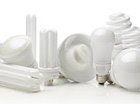
CFL bulbs: A bright idea.


We hear about the environment a lot these days what with hybrid cars, global warming, and alternative energy sources regularly in the headlines. Often times thinking about the environment means making tough sacrifices such as spending thousands of extra dollars on a hybrid car in order to save gas, or sitting and listening to Al Gore drone on for 90 minutes about melting glaciers.

Sometimes being environmentally correct is very easy, however. That's what makes the compact fluorescent lightbulb (CFL) story so remarkable. It's the rare technology that's economical in every sense of the word, saving money, time, and electricity.

CFL technology has been around for years as an energy saving alternative to the "regular" incandescent lightbulbs. Despite using about 75% less energy than equivalent conventional bulbs and lasting ~8x as long, CFLs were "prohibitively expensive" for consumers, costing several dollars per bulb (compared to a buck for four regular bulbs). Thus, they weren't popular.

Today CFL bulbs still deliver energy savings but at much lower initial cost than in years past. Thanks in part to a push by Wal Mart these light bulbs are now much cheaper and should be used by everyone. Although these bulbs are still about 10 times more expensive than conventional bulbs (which is to say, just $2 or so) they are one of the best investments that everyone can make. The energy they save over just a few months of usage pays for the cost of the bulb. After that, it's all gravy. The bulbs last for many years which means no changing bulbs and no buying new bulbs. And over the lifetime of the bulb one could save about $40 worth of electricity. Good for the wallet and the environment.

Switching from conventional incandescent lightbulbs to CFLs may seem like a mundane action – frankly you may not even notice the $4 monthly savings on your electricity bill – but the energy savings can be enormous given that it is the type of action that everyone can take part in. 100 million CFLs used instead of regular bulbs would reduce green house gas emissions as much as taking a million cars off of the road.

Lightbulbs. So boring, yet so amazing. Next time somebody shows off their Prius or wants to make a movie about saving the spotted owl, tell 'em you've got a brighter idea: you're gonna go change a lightbulb!

update: feature CFL article in Fast Company.

Monday, September 18, 2006

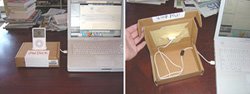
biodegradable iPod dock


Props to flickrflick151 for this resourceful idea. =)

What do you want?


There's a lot of great tech stuff that's in development. What things are you looking forward to? WiMax? WiFi calling? On-demand or downloadable TV content? RFID?
Maybe you're a dreamer and you want teleportation? Or maybe Microsoft Vista?


Hey, at least I'm asking. It's more than I can say for Sprint offering streaming movies on a cell phone for $4. Surely you have some better ideas?